- AI Horizons
- Posts
- AI Agents Just Got Their Own Social Network
AI Agents Just Got Their Own Social Network
PLUS: Google’s Infinite AI Worlds, Claude Gets Workplace Apps, and Robot Brains at Scale
In partnership with

Welcome back to AI Horizons, your weekly guide to the latest in AI and tech for builders, leaders, and curious minds everywhere. Here’s what’s on deck:
Viral OpenClaw & Moltbook Explained
Google’s Project Genie
Claude Workplace Apps
Apple’s Audio AI Acquisition
General-Purpose Robot Intelligence
AI That Writes Scientific Theories
FEATURED INSIGHT💡
Moltbook: When AI Agents Don’t Just Work, They Hang Out

An open-source AI agent project just went viral across the internet after showcasing something many people have been waiting for: an AI assistant that doesn’t just chat, but acts. The project, now called OpenClaw after two rapid rebrands, can live inside messaging apps, remember context over time, and autonomously run tasks across calendars, files, browsing, and more.
Then things got stranger. A companion site called Moltbook emerged — effectively a social network where AI agents post, comment, complain about their humans, and “talk shop” with other agents. That idea alone sent the internet into a mix of fascination and panic. Some called it the most interesting place online right now. Others saw it as a security nightmare waiting to happen.
Why it matters: Moltbook isn’t important because bots are posting memes. It’s important because it shows what happens when autonomous agents gain memory, tools, and shared context. The same capabilities that unlock massive productivity also introduce new risks, especially when agents can read untrusted content, store it long-term, and act later on a user’s behalf.
Better prompts. Better AI output.
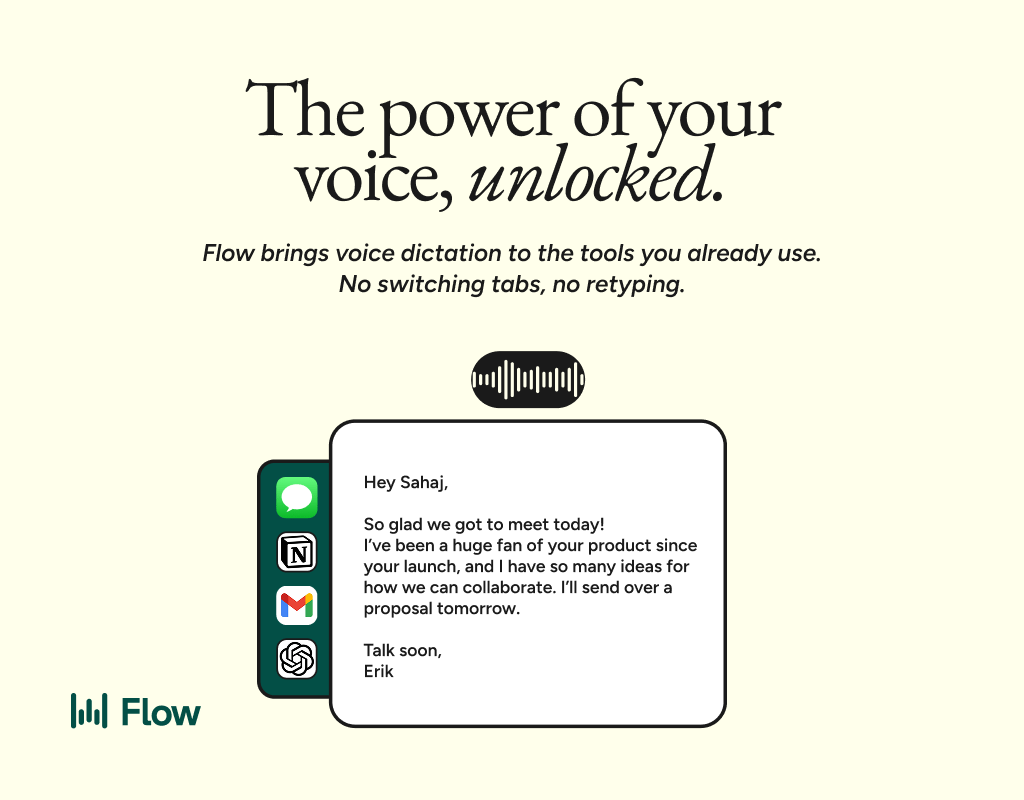
AI gets smarter when your input is complete. Wispr Flow helps you think out loud and capture full context by voice, then turns that speech into a clean, structured prompt you can paste into ChatGPT, Claude, or any assistant. No more chopping up thoughts into typed paragraphs. Preserve constraints, examples, edge cases, and tone by speaking them once. The result is faster iteration, more precise outputs, and less time re-prompting. Try Wispr Flow for AI or see a 30-second demo.
ON THE HORIZON 🌅
Project Genie: World Models Go From Research Demo to Playable Prototype
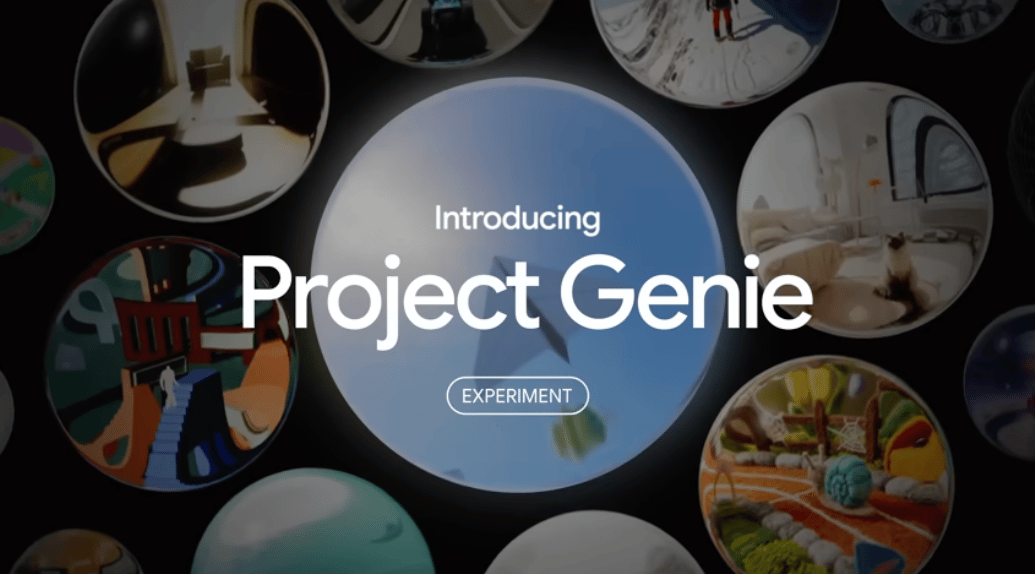
Google is rolling out Project Genie, a web prototype that lets users create and explore interactive worlds generated in real time as you move through them. You can prompt with text and images to “sketch” a world, explore it as a navigable environment, then remix worlds by building on existing prompts — and export video of your explorations.
This is early (latency, imperfect physics, 60-second generation limit), but it’s a clear signpost: world models are becoming a consumer-facing product surface. If this keeps improving, it won’t just reshape creative workflows; it will become a sandbox for training agents, simulating environments, and building interactive experiences without traditional game engines.
LATEST IMPORTANT NEWS 📰
Anthropic launches interactive Claude apps
Claude users on paid tiers can now open interactive workplace apps inside Claude (Slack, Canva, Figma, Box, Clay; Salesforce coming), enabling logged-in tool use with a more visual interface, and reinforcing that the real power (and risk) is in permissions + connected workflows.
Apple acquires Israeli audio AI startup Q.ai
Apple bought Q.ai, a startup focused on ML for better audio understanding in challenging settings (including whispered speech), with reported work spanning advanced sensing ideas like facial micromovements to infer speech and other signals — a strong hint Apple is doubling down on next-gen voice/audio intelligence.
Physical Intelligence’s robot brains
Physical Intelligence is building general-purpose robotic foundation models (“ChatGPT for robots”), using lots of real-world task data + compute to generalize across hardware and tasks — and it’s backed with massive funding while staying unusually research-first, even as competitors push faster commercialization.

Turn AI into Your Income Engine
Ready to transform artificial intelligence from a buzzword into your personal revenue generator
HubSpot’s groundbreaking guide "200+ AI-Powered Income Ideas" is your gateway to financial innovation in the digital age.
Inside you'll discover:
A curated collection of 200+ profitable opportunities spanning content creation, e-commerce, gaming, and emerging digital markets—each vetted for real-world potential
Step-by-step implementation guides designed for beginners, making AI accessible regardless of your technical background
Cutting-edge strategies aligned with current market trends, ensuring your ventures stay ahead of the curve
Download your guide today and unlock a future where artificial intelligence powers your success. Your next income stream is waiting.
FOR THE TECHNICALLY INCLINED 🛠️
Theorizer: From “Summarize Papers” to “Extract Scientific Laws”
Ai2 released Theorizer, an open-source framework that reads up to ~100 papers per query and outputs structured theories as ⟨LAW, SCOPE, EVIDENCE⟩ — not just summaries. The core idea is “theory as compressed knowledge”: identify repeatable patterns, state where they hold, and attach evidence traced to the literature.
It’s not a truth machine (the outputs are hypotheses), and it’s not instant (15–30 minutes per query), but it’s a meaningful shift: literature-to-theory synthesis that could help researchers orient faster and surface testable claims from a messy pile of findings.
The decision is yours

Confusing, jargon-packed, and time-consuming. Or quick, direct, and actually enjoyable.
Easy choice.
There’s a reason over 4 million professionals read Morning Brew instead of traditional business media. The facts hit harder, it’s built to be skimmed, and for once, business news is something you actually look forward to reading.
Try Morning Brew’s newsletter for free and realize just how good business news can be.
AI TOOL OF THE DAY 🚀
Pencil: An infinite design canvas inside your IDE that uses AI to generate screens/flows and ship code that stays aligned with the design.
That's all for now!
We'll catch you in the next one.
Cheers,
The AI Horizons Team
P.S. If you missed our last issue, no worries, you can check out all previous issues here!
P.P.S We value your thoughts, feedback, and questions - feel free to respond directly to this email!
... and if you enjoyed this email and would like to support our work and help us keep bringing you cutting-edge AI insights, you can donate here. Every bit makes a difference—thank you for your support!
What did you think about today's email? |