- AI Horizons
- Posts
- Claude Enters Healthcare with HIPAA-Ready AI
Claude Enters Healthcare with HIPAA-Ready AI
PLUS: OpenAI Backs Brain-Computer Interfaces, AI Power Plays at the World Economic Forum in Davos, How to Get Discovered Inside ChatGPT
In partnership with

Welcome back to AI Horizons, your weekly guide to the latest in AI and tech for builders, leaders, and curious minds everywhere. Here’s what’s on deck:
Anthropic’s Claude for healthcare
Brain-computer interfaces
OpenAI’s business model
AI at the World Economic Forum
Google’s AI-powered SAT practice
A tool to get discovered inside ChatGPT
FEATURED INSIGHT💡
Claude Brings HIPAA-Ready AI to Healthcare Operations
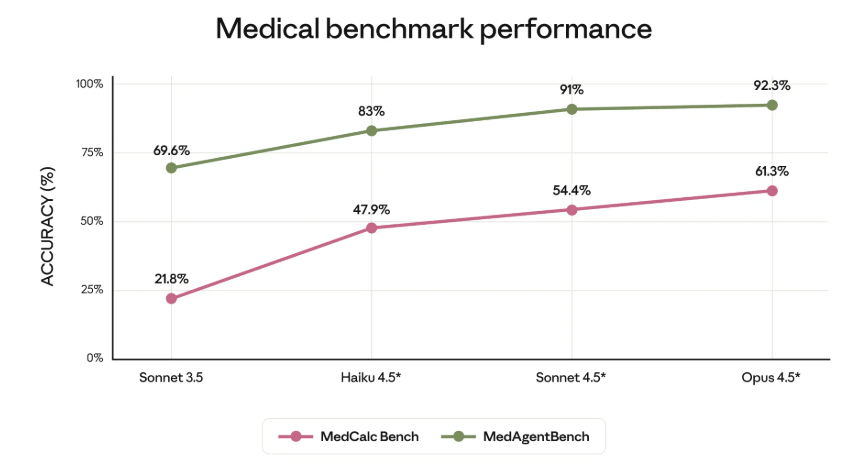
Anthropic is expanding Claude into healthcare with HIPAA-ready products and connectors designed for use by providers and payers. The release supports coverage checks, medical coding, and care operations, areas where teams regularly work across multiple systems and policy sources.
Key additions include connectors for CMS coverage determinations, ICD-10 codes, and the National Provider Identifier registry, along with agent skills for FHIR development and prior authorization review. In practice, this helps teams pull policy, clinical, and administrative information into a single workflow, reducing time spent searching across fragmented systems.
Better prompts. Better AI output.
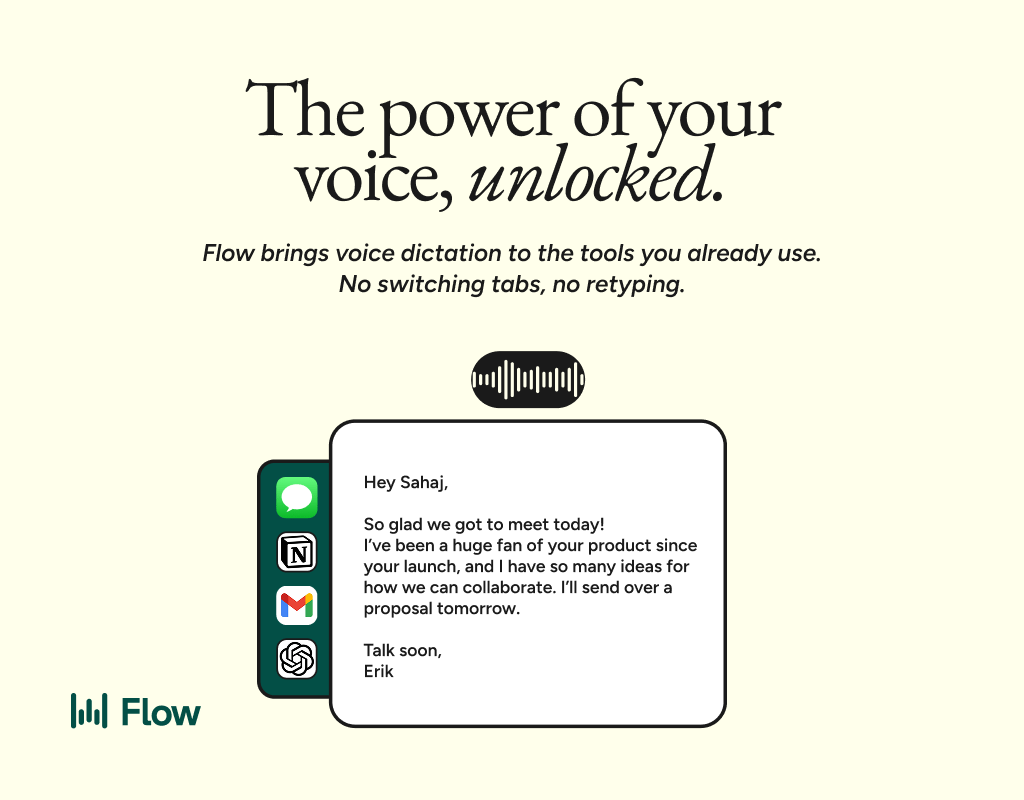
AI gets smarter when your input is complete. Wispr Flow helps you think out loud and capture full context by voice, then turns that speech into a clean, structured prompt you can paste into ChatGPT, Claude, or any assistant. No more chopping up thoughts into typed paragraphs. Preserve constraints, examples, edge cases, and tone by speaking them once. The result is faster iteration, more precise outputs, and less time re-prompting. Try Wispr Flow for AI or see a 30-second demo.
ON THE HORIZON 🌅
OpenAI Invests in Merge Labs to Advance Brain–Computer Interfaces
OpenAI is participating in the seed round for Merge Labs, a research lab focused on developing new approaches to brain–computer interfaces that combine biology, devices, and AI. Merge’s stated goal is to increase the bandwidth and coverage of BCIs while reducing invasiveness, with early applications aimed at restoring or supporting human capabilities in medical and clinical settings.
Over the longer term, higher-bandwidth interfaces could change how people interact with AI systems by reducing reliance on keyboards, screens, and manual inputs. For AI developers and platform builders, this points toward future systems designed around intent detection, continuous context, and adaptive interaction, rather than discrete commands or sessions.
LATEST IMPORTANT NEWS 📰
AI Takes Over Davos (and the Gloves Come Off)
This year’s World Economic Forum felt less like a policy summit and more like a live AI industry showdown, with Elon Musk, Jensen Huang, Dario Amodei, and Satya Nadella all sharing the stage. The throughline wasn’t just optimism about AI’s potential, but visible tension: executives openly sniping at competitors, debating chip access to China, and signaling concern about whether usage can scale fast enough to justify the massive buildout. Nadella emphasized broad adoption as the antidote to an AI bubble, while Huang pushed for even more investment, framing data centers as engines of future jobs. For the first time, the rivalry, geopolitics, and economics of AI were all colliding in public, in real time.
OpenAI ties revenue growth directly to compute expansion.
CFO Sarah Friar says OpenAI surpassed $20B in annualized revenue in 2025, following rapid increases from $2B in 2023 to $6B in 2024. The company points to compute as the limiting factor: available capacity grew from 0.2 GW to roughly 1.9 GW over the same period, enabling more reliable, higher-volume use across consumer, team, and API products. Friar describes OpenAI’s strategy as aligning pricing with real-world usage, with 2026 focused on moving AI from experimentation into sustained adoption across healthcare, science, and enterprise operations.
Google’s free SAT practice via Gemini
Students can now ask Gemini for a practice SAT test, get a full exam, then receive analysis of strengths, weaknesses, and explanations for missed questions, with content partnered and vetted with education companies like Princeton Review. It’s a big access unlock for students who can’t afford tutoring, but it also raises real questions about dependency, learning habits, and pressure on the traditional tutoring market.
AI-native CRM

“When I first opened Attio, I instantly got the feeling this was the next generation of CRM.”
— Margaret Shen, Head of GTM at Modal
Attio is the AI-native CRM for modern teams. With automatic enrichment, call intelligence, AI agents, flexible workflows and more, Attio works for any business and only takes minutes to set up.
Join industry leaders like Granola, Taskrabbit, Flatfile and more.
FOR THE TECHNICALLY INCLINED 🛠️
Qwen3-TTS goes open source with streaming voice, design, and cloning
Qwen has open-sourced Qwen3-TTS, a text-to-speech model family that supports voice design from natural language, instruction-controlled prosody, and rapid voice cloning from short audio samples. The release includes streaming generation with very low latency and multilingual support across ten languages.
By releasing the full models, tokenizer, and tooling, Qwen makes real-time, controllable speech generation available outside closed APIs. For teams building voice interfaces, agents, or interactive systems, this lowers the barrier to running, inspecting, and fine-tuning high-quality TTS in production.
Can you scale without chaos?

It's peak season, so volume's about to spike. Most teams either hire temps (expensive) or burn out their people (worse). See what smarter teams do: let AI handle predictable volume so your humans stay great.
AI TOOL OF THE DAY 🚀
Noodle Seed turns your website into an “app inside ChatGPT/Claude/Gemini” so your business can be discovered conversationally.
That's all for now!
We'll catch you in the next one.
Cheers,
The AI Horizons Team
P.S. If you missed our last issue, no worries, you can check out all previous issues here!
P.P.S We value your thoughts, feedback, and questions - feel free to respond directly to this email!
... and if you enjoyed this email and would like to support our work and help us keep bringing you cutting-edge AI insights, you can donate here. Every bit makes a difference—thank you for your support!
What did you think about today's email? |