- AI Horizons
- Posts
- Claude Opus 4.6 Pushes AI Into the Long-Session Era
Claude Opus 4.6 Pushes AI Into the Long-Session Era
PLUS: GPT-5’s Autonomous Lab, AI That Can Verify Itself, and AI-Powered Supply Chains
In partnership with

Welcome back to AI Horizons, your weekly guide to the latest in AI and tech for builders, leaders, and curious minds everywhere. Here’s what’s on deck:
Claude 4.6 release
1M token context
GPT-5 cloud lab
Gemini research agent
Agentic procurement AI
AI society model
FEATURED INSIGHT💡
Claude Opus 4.6: Big Context is Finally Becoming Usable

Anthropic’s Claude Opus 4.6 is the latest version of its flagship AI model, designed for more than quick answers. It’s built for sustained, real work. The upgrade improves agentic coding, performs more reliably across large codebases, strengthens debugging and code review, and introduces a 1M-token context window (beta)—the first time an Opus-class model can handle that scale of input.
Alongside the model upgrade, Anthropic added workflow controls that make long sessions practical: adjustable effort levels, adaptive reasoning that scales depth automatically, context compaction to manage extended tasks, and multi-agent “teams” in Claude Code to parallelize work. Together, these additions position Claude as a system that can remain focused and effective across complex, multi-step projects rather than resetting after every prompt.
Better prompts. Better AI output.
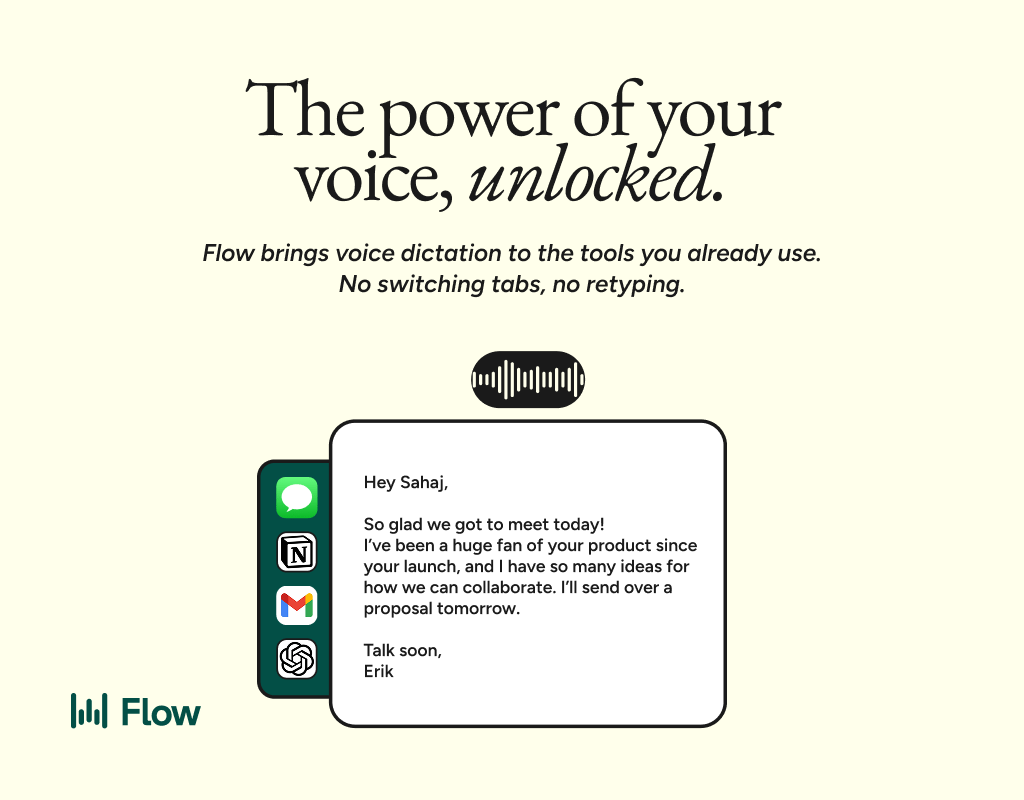
AI gets smarter when your input is complete. Wispr Flow helps you think out loud and capture full context by voice, then turns that speech into a clean, structured prompt you can paste into ChatGPT, Claude, or any assistant. No more chopping up thoughts into typed paragraphs. Preserve constraints, examples, edge cases, and tone by speaking them once. The result is faster iteration, more precise outputs, and less time re-prompting. Try Wispr Flow for AI or see a 30-second demo.
ON THE HORIZON 🌅
GPT-5 Lowers the Cost of Cell-Free Protein Synthesis

OpenAI partnered with Ginkgo Bioworks to connect GPT-5 to an automated cloud laboratory, creating a closed-loop system for optimizing cell-free protein synthesis (CFPS), a widely used method for producing proteins without living cells. In this setup, the model designs experiments, robotic systems execute them, results are fed back into the model, and the next round is refined accordingly. Across six rounds, the system ran more than 36,000 reaction variations and achieved a reported 40% reduction in protein production cost, along with improvements in reagent efficiency.
This matters because biology has traditionally been limited by slow, manual experimentation. By linking a frontier model directly to lab automation—with safeguards ensuring experiments are physically executable—the team demonstrated how large-scale iteration can systematically uncover better reaction conditions. If this framework extends to other biological workflows, it could meaningfully accelerate research timelines and lower development costs in biotechnology, pharmaceuticals, and industrial biology.
LATEST IMPORTANT NEWS 📰
Simile Raises $100M to Simulate Society
Simile announced $100M in backing to build what it calls the first AI simulation of society, using generative agents modeled on real human behavior. The company claims clients are already using it to rehearse earnings calls, test policy decisions, and model legal outcomes — essentially previewing consequences before triggering real-world actions.
Didero Lands $30M to Automate Global Procurement
Startup Didero raised $30M to build an agentic AI layer for manufacturing procurement. Its system ingests natural-language communications — emails, POs, negotiations — and automates sourcing through payment, aiming to reduce the manual overhead that dominates global supply chains.
Spotify Developers “Stopped Writing Code”
Spotify’s co-CEO said its top developers haven’t written code since December, instead supervising AI systems that generate, deploy, and iterate on features. Engineers can reportedly trigger fixes or new functionality remotely, review results, and merge to production — reframing developers as editors of AI output rather than primary authors.
Will Your Retirement Income Last?

A successful retirement can depend on having a clear plan. Fisher Investments’ The Definitive Guide to Retirement Income can help you calculate your future costs and structure your portfolio to meet your needs. Get the insights you need to help build a durable income strategy for the long term.
FOR THE TECHNICALLY INCLINED 🛠️
Gemini Deep Think Moves Into Research Workflows
Google’s DeepMind detailed how Gemini Deep Think is being used to tackle professional research problems in mathematics, physics, and computer science through an agentic research system. Their internal math agent, codenamed Aletheia, generates candidate solutions, verifies them using structured reasoning checks, revises flawed approaches, and can explicitly acknowledge when a problem cannot yet be solved. It also uses web search and literature retrieval to ground its reasoning in published work.
This is important because research-level math and theoretical science require iterative proof construction, error detection, and disciplined verification. By embedding those behaviors into a reasoning pipeline, DeepMind is demonstrating how foundation models can function as structured collaborators in scientific discovery rather than isolated answer generators.
AI TOOL OF THE DAY 🚀
Dokie turns PDFs, docs, and raw data into animated, interactive presentations using AI-powered structuring and visualization.
That's all for now!
We'll catch you in the next one.
Cheers,
The AI Horizons Team
P.S. If you missed our last issue, no worries, you can check out all previous issues here!
P.P.S We value your thoughts, feedback, and questions - feel free to respond directly to this email!
... and if you enjoyed this email and would like to support our work and help us keep bringing you cutting-edge AI insights, you can donate here. Every bit makes a difference—thank you for your support!
What did you think about today's email? |