- AI Horizons
- Posts
- Microsoft Copilot Cowork, Google Maps AI Upgrade, and Bumble’s New AI Dating Assistant
Microsoft Copilot Cowork, Google Maps AI Upgrade, and Bumble’s New AI Dating Assistant
PLUS: OpenAI’s Agent Workflow Infrastructure, a Quantum-Ready Enterprise AI Platform, and Rox AI’s $1.2B rise
In partnership with

Welcome back to AI Horizons, your weekly guide to the latest in AI and tech for builders, leaders, and curious minds everywhere. Here’s what’s on deck:
Copilot Cowork automates workflows
Google Maps Upgrades
Bumble launches Bee assistant
Rox AI reaches unicorn
Qutwo prepares quantum AI
OpenAI agent execution loop
FEATURED INSIGHT💡
Copilot Cowork Signals the Shift from AI Assistant to AI Operator
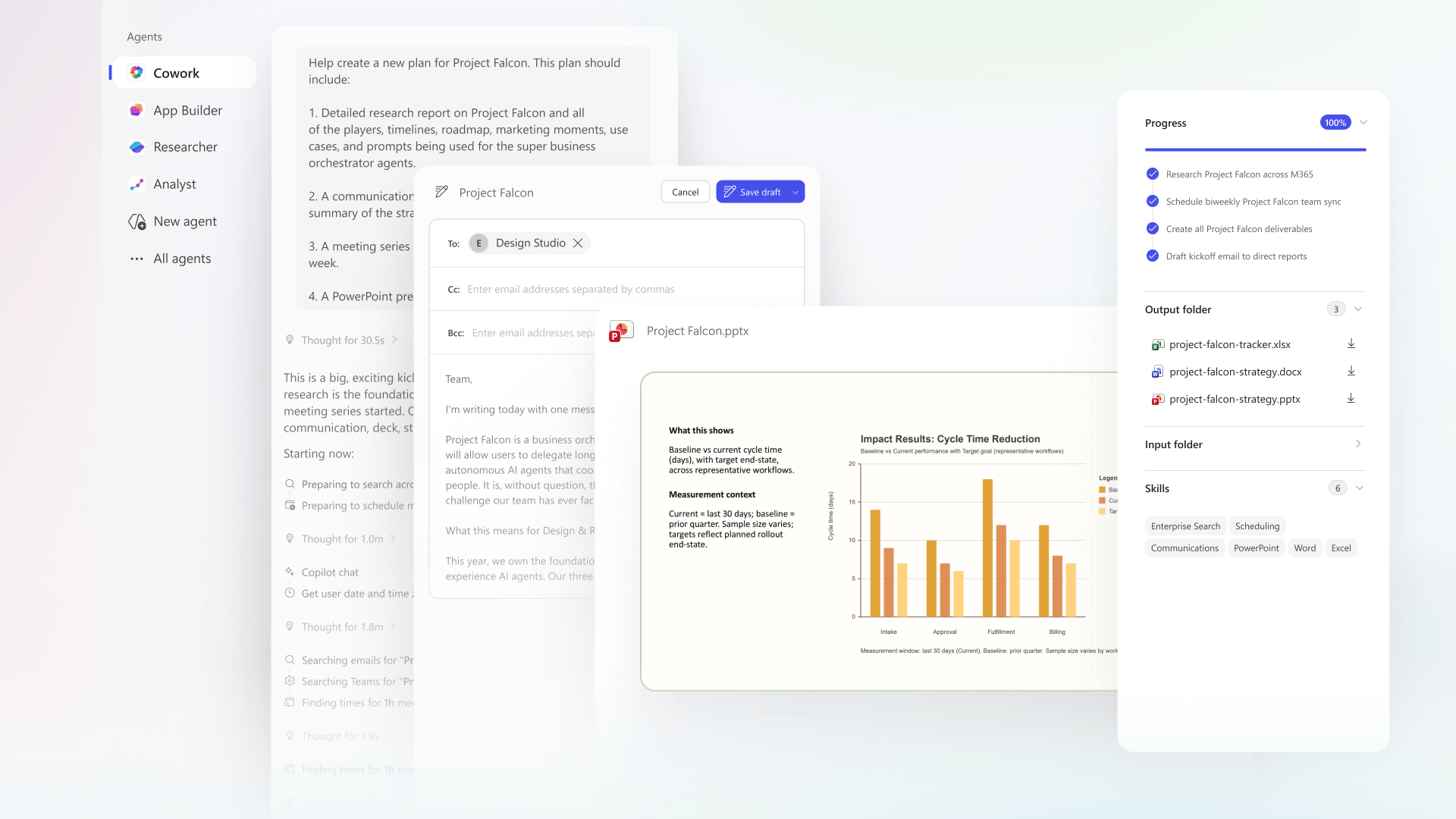
Microsoft is making a bigger claim for Copilot: not just that it can help you write, summarize, or answer questions, but that it can start carrying work forward on your behalf. Its new Copilot Cowork experience is built around delegation. Instead of asking for a draft or a summary, users can describe an outcome, and Copilot turns that request into a plan grounded in emails, meetings, files, messages, and business data across Microsoft 365. The result is a more active model of work, where the system can reschedule meetings, prepare briefing documents, build research packets, and assemble launch materials while still pausing for approvals and checkpoints along the way.
What stands out here is not just the feature set, but the direction of travel. Microsoft is clearly pushing toward a future where productivity software becomes an execution layer, not just a collection of apps. That matters for enterprises because it changes the value proposition of workplace AI. The win is no longer faster drafting alone. It is reducing coordination drag, shrinking the time between intent and action, and letting people keep multiple workstreams moving without manually shepherding each one. If this model holds up in practice, it could become one of the clearest examples yet of AI moving from assistant mode into real operational leverage.
Stop Chasing Docs. Automate Them.
Docs piling up faster than you can write them? Same.
Every team knows the feeling — product ships, docs don't. Changelogs get forgotten. Style violations quietly accumulate. Broken links go unnoticed for months.
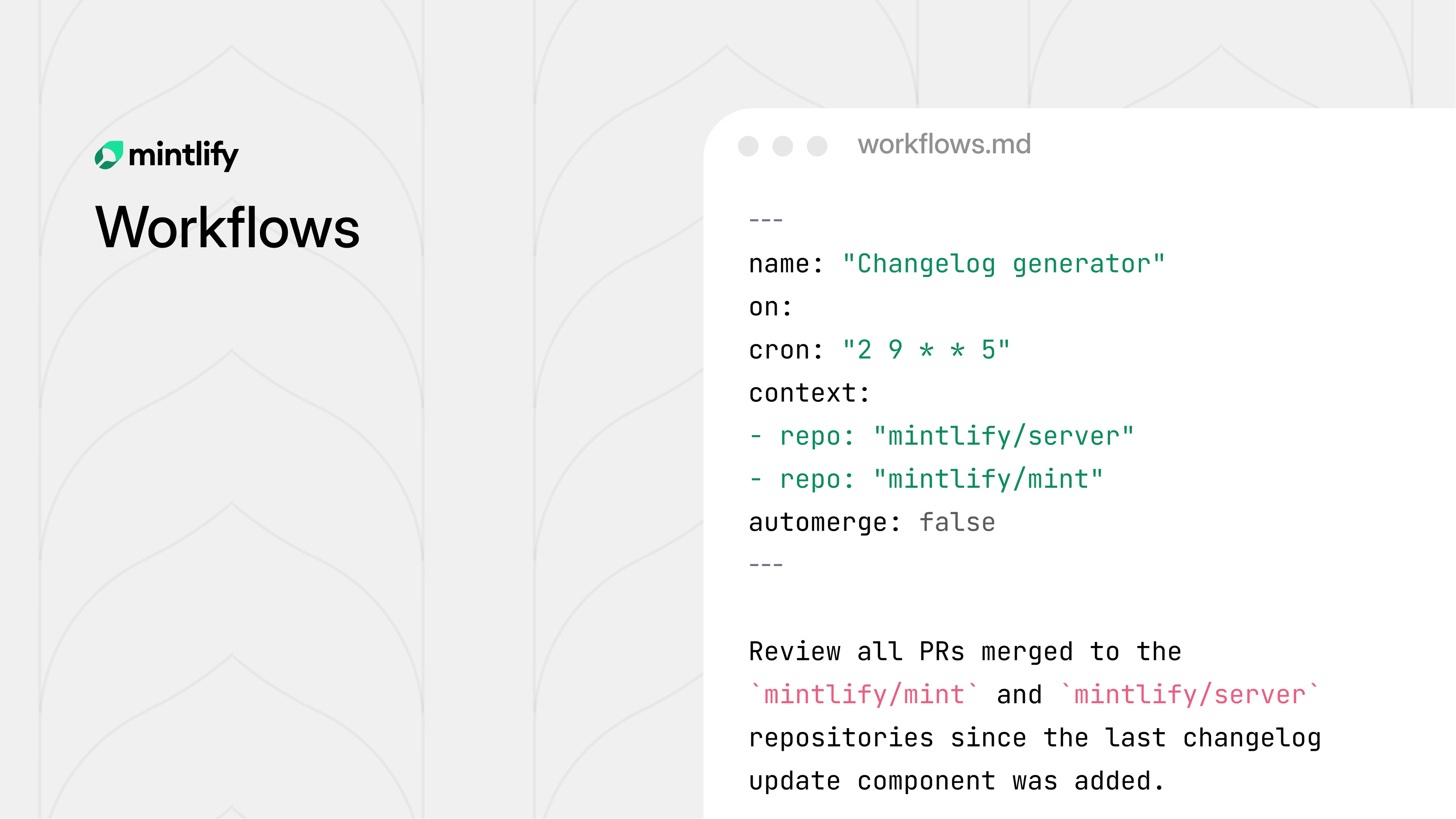
Mintlify's new Workflows feature fixes this. Define automation rules, and the agent handles the recurring maintenance work for you — on your schedule, by your rules.
Draft docs when a PR merges. Generate changelogs every Friday. Run a style audit on every push. Flag translation lag before it becomes a problem. Each workflow is version controlled, fully configurable, and fits into your existing review process.
You decide when it runs, what it checks, and whether changes get committed directly or opened as a pull request for review.
The result: documentation that actually keeps up with your product, without someone manually chasing it down.
ON THE HORIZON 🌅
Google Maps Is Becoming a Conversational Interface for the Real World
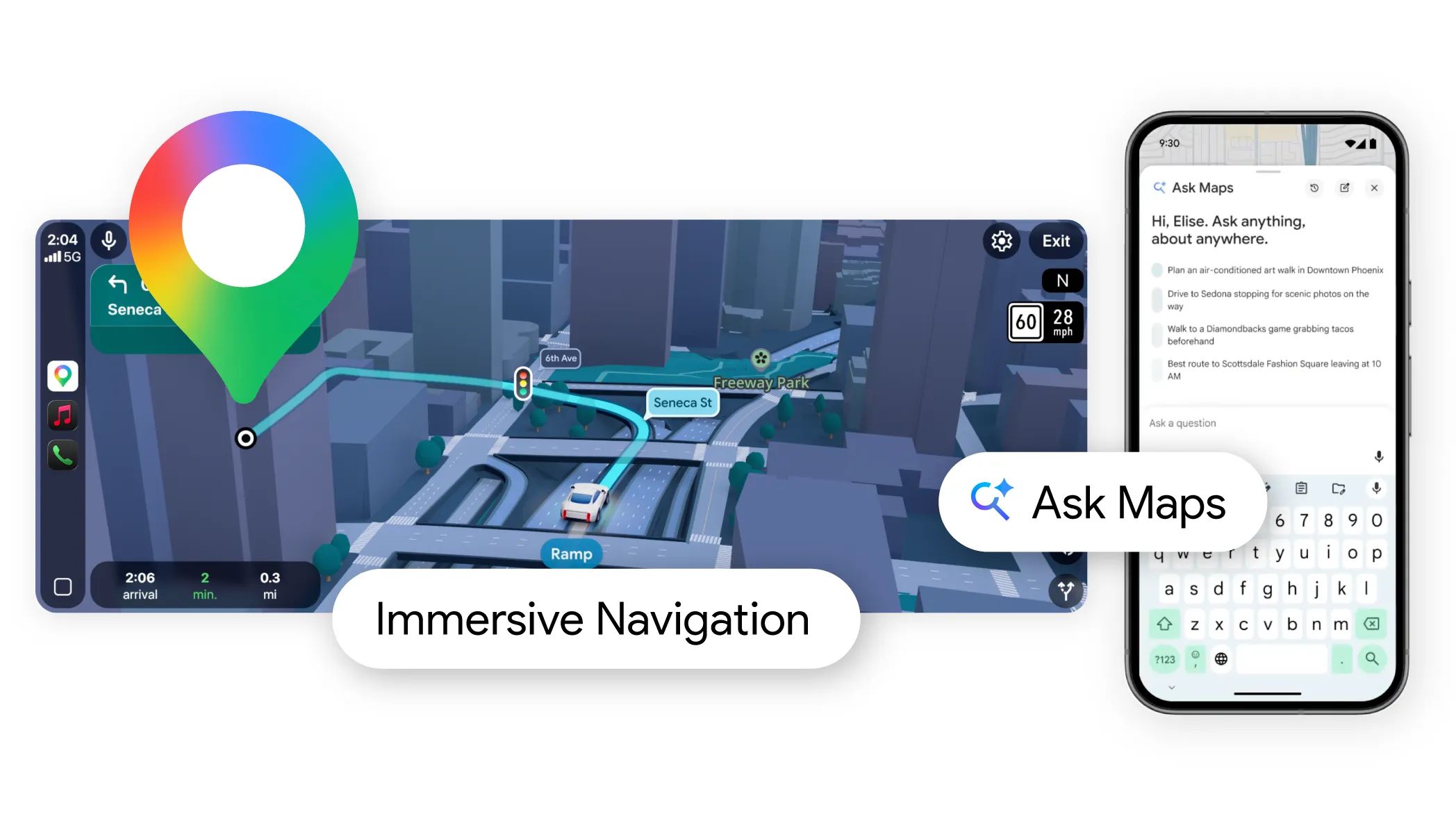
Google is giving Maps one of its biggest AI overhauls yet, and the implications go well beyond navigation. The new Ask Maps feature turns search into conversation, letting users ask layered real-world questions like where to charge a phone without waiting in a coffee line, or where to find a lit public tennis court that is open tonight. Under the hood, Google is blending Gemini with its enormous location graph, community reviews, saved preferences, and trip-planning context. That means Maps is becoming less of a search box and more of an agentic discovery layer that can personalize recommendations, answer nuanced intent, and help people move directly from question to action.
At the same time, Google is reworking the driving experience with Immersive Navigation, a more visual and spatial guidance system that uses 3D rendering, richer route awareness, and more natural voice instructions. For consumers, that means less guesswork. For businesses, it hints at something larger: location platforms are becoming intelligent decision engines. When maps can interpret intent, compare tradeoffs, personalize suggestions, and guide users to action, they become a much more strategic layer for commerce, travel, local discovery, and real-world customer acquisition.
LATEST IMPORTANT NEWS 📰
Bumble introduces “Bee,” an AI dating assistant
Bumble is testing a new AI assistant called Bee that learns users’ values, relationship goals, communication style, and dating intentions through private conversations, then uses that context to recommend stronger matches. The bigger story is that Bumble appears to be moving away from swipe-first mechanics and toward a more conversational, AI-mediated dating experience, with plans to eventually extend Bee into features like date suggestions and feedback loops.
Rox AI reportedly reaches a $1.2B valuation
Sales automation startup Rox AI has reportedly hit a $1.2 billion valuation, signaling how hot the market remains for AI systems that promise measurable productivity gains in revenue teams. Rox’s pitch is especially notable because it is not positioning itself as a narrow point solution, but as an intelligent operating layer that plugs into existing business tools and deploys AI agents across prospecting, account monitoring, and CRM updates.
Qutwo wants enterprises building for the quantum era now
A new startup called Qutwo, led by former Silo AI CEO Peter Sarlin, is aiming to help enterprises prepare for a future where AI workloads may eventually shift from classical to quantum systems. Rather than waiting for quantum computing to fully mature, the company is building an orchestration layer that supports hybrid and quantum-inspired approaches today, which makes it an early bet on infrastructure for a much longer-term computing transition.
Your AI is resolving tickets. Is it keeping customers?

Resolution rates look great. But Gladly's 2026 Customer Expectations Report reveals the metric most CIOs are missing — and what the data says about where AI investments actually translate into retention, not just throughput.
FOR THE TECHNICALLY INCLINED 🛠️
OpenAI’s Responses API is starting to look like real agent infrastructure
OpenAI recently outlined how it is extending the Responses API with a computer environment so models can do more than generate text. The key idea is an agent loop: the model proposes an action, the platform executes it through tools like a shell interface, and the results come back into context until the workflow is complete. That setup lets models run commands, process files, fetch data, use structured storage like SQLite, and generate artifacts such as reports or spreadsheets instead of just describing what should happen.
What makes this interesting for developers is the infrastructure layer around it. OpenAI is pairing orchestration with hosted containers, bounded output, native compaction for long-running tasks, and reusable “skills” that package recurring workflows into versioned bundles. In practical terms, that means the platform is moving closer to a real operating environment for agents, where execution, memory, security controls, and reusable task patterns are first-class parts of the stack.
AI TOOL OF THE DAY 🚀
Figr is a product-aware AI design tool that thinks through UX decisions, edge cases, user flows, and prototyping before handoff, making it a compelling option for product managers and designers who want higher-fidelity outputs with less rework.
The Future of AI in Marketing. Your Shortcut to Smarter, Faster Marketing.

This guide distills 10 AI strategies from industry leaders that are transforming marketing.
Learn how HubSpot's engineering team achieved 15-20% productivity gains with AI
Learn how AI-driven emails achieved 94% higher conversion rates
Discover 7 ways to enhance your marketing strategy with AI.
That's all for now!
We'll catch you in the next one.
Cheers,
The AI Horizons Team
P.S. If you missed our last issue, no worries, you can check out all previous issues here!
P.P.S We value your thoughts, feedback, and questions - feel free to respond directly to this email!
... and if you enjoyed this email and would like to support our work and help us keep bringing you cutting-edge AI insights, you can donate here. Every bit makes a difference—thank you for your support!
What did you think about today's email? |