- AI Horizons
- Posts
- OpenAI Launches ChatGPT Health, Gmail Gets Smarter, and AI Starts Predicting Disease
OpenAI Launches ChatGPT Health, Gmail Gets Smarter, and AI Starts Predicting Disease
PLUS: AI Moves Into Construction, OpenAI Adds Talent, and Make AI Writing Sound Human
In partnership with

Welcome back to AI Horizons, your weekly guide to the latest AI and tech breakthroughs, emerging trends, and practical strategies for builders, leaders, and curious minds everywhere. Here’s what’s on deck:
ChatGPT Health
Smarter Gmail
Sleep disease prediction
AI in construction
OpenAI acqui-hire
Musk vs. OpenAI
FEATURED INSIGHT💡
ChatGPT Health is a new kind of “space” inside ChatGPT

OpenAI introduced ChatGPT Health, a dedicated experience inside ChatGPT built specifically for health and wellness. The big shift is that it’s not just answering health questions, it’s designed to securely combine your health context with the model, so the conversation can be grounded in your own records and tracking.
Health runs as a separate compartment with additional protections, separate memories, and strong boundaries between health and non-health chats. You can connect medical records and wellness apps (availability varies by region), and OpenAI says Health conversations are not used to train foundation models. The rollout starts with a small group, with broader web and iOS availability planned soon.
Introducing the first AI-native CRM

Connect your email, and you’ll instantly get a CRM with enriched customer insights and a platform that grows with your business.
With AI at the core, Attio lets you:
Prospect and route leads with research agents
Get real-time insights during customer calls
Build powerful automations for your complex workflows
Join industry leaders like Granola, Taskrabbit, Flatfile and more.
ON THE HORIZON 🌅
Gmail is turning into an inbox you can question, not just search
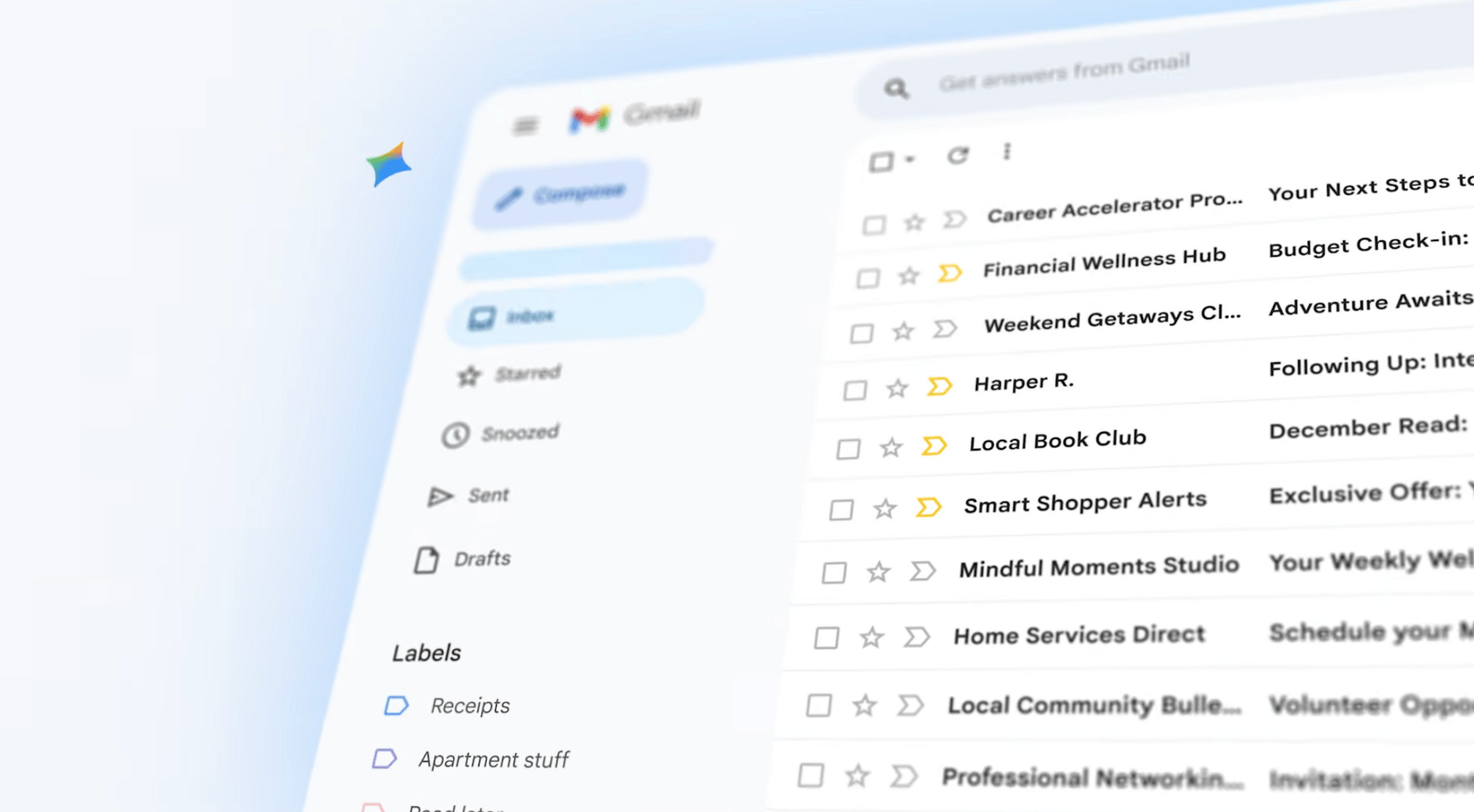
Google says Gmail is entering the Gemini era, with new features that treat your inbox like a knowledge source instead of a pile of threads. The headline is AI Overviews: Gmail can summarize messy email chains into a clean set of key points, and it can also answer questions you ask about your inbox in natural language.
Google is also testing an “AI Inbox” concept that highlights what’s important and pulls out to-dos, with personalization signals like frequent contacts and inferred relationships. This is one of the clearest examples yet of productivity tools shifting from “find and read” to “ask and act.”
LATEST IMPORTANT NEWS 📰
Caterpillar brings AI into construction equipment
Caterpillar is piloting an AI assistant inside its Cat 306 CR Mini Excavator, built on Nvidia’s Jetson Thor platform. The system allows operators to ask questions, access safety guidance, and schedule service while machines stream real-time data for simulation and planning through Nvidia Omniverse.
Elon Musk’s OpenAI lawsuit heads to trial
A U.S. judge ruled there is sufficient evidence for Elon Musk’s lawsuit against OpenAI to proceed to a jury trial in March, centered on claims that OpenAI departed from its original nonprofit commitments during its restructuring.
OpenAI acquires the Convogo team
OpenAI is acqui-hiring the founders and team behind executive coaching tool Convogo, which will shut down its product as the team joins OpenAI to work on AI cloud initiatives. The move continues OpenAI’s pattern of acquiring teams rather than standalone products.
Can you scale without chaos?

It's peak season, so volume's about to spike. Most teams either hire temps (expensive) or burn out their people (worse). See what smarter teams do: let AI handle predictable volume so your humans stay great.
FOR THE TECHNICALLY INCLINED 🛠️
Stanford publishes the first large-scale sleep foundation model for disease prediction
Researchers at Stanford released SleepFM, a multimodal foundation model trained on over half a million hours of polysomnography data. From a single night of sleep, the model can predict future disease risk across more than 100 conditions and generalizes well to external datasets.
SleepFM uses self-supervised contrastive learning and a channel-agnostic architecture to handle heterogeneous sleep recordings, showing how foundation models can extract long-term health signals from raw physiological data.
All the stories worth knowing—all in one place.
Business. Tech. Finance. Culture. If it’s worth knowing, it’s in the Brew.
Morning Brew’s free daily newsletter keeps 4+ million readers in the loop with stories that are smart, quick, and actually fun to read. You’ll learn something new every morning — and maybe even flex your brain with one of our crosswords or quizzes while you’re at it.
Get the news that makes you think, laugh, and maybe even brag about how informed you are.
AI TOOL OF THE DAY 🚀
AI Humanizer rewrites AI-generated text to sound more natural in a single click.
That's all for now!
We'll catch you in the next one.
Cheers,
The AI Horizons Team
P.S. If you missed our last issue, no worries, you can check out all previous issues here!
P.P.S We value your thoughts, feedback, and questions - feel free to respond directly to this email!
... and if you enjoyed this email and would like to support our work and help us keep bringing you cutting-edge AI insights, you can donate here. Every bit makes a difference—thank you for your support!
What did you think about today's email? |