- AI Horizons
- Posts
- OpenAI Proposes a Four-Day Workweek in the Age of AI
OpenAI Proposes a Four-Day Workweek in the Age of AI
PLUS: Meta Unveils Muse Spark, Anthropic Secures Massive Compute Expansion, NVIDIA Pushes Into Physical AI
In partnership with

Welcome back to AI Horizons, your weekly guide to the latest in AI and tech for builders, leaders, and curious minds everywhere. Here’s what’s on deck:
OpenAI AI economy vision
Meta launches Muse Spark
Anthropic locks in compute
ChatGPT adds new Pro tier
NVIDIA advances physical AI
Poke simplifies AI agents
FEATURED INSIGHT💡
Muse Spark Is Meta’s Opening Move in the Race Toward Personal Superintelligence

Meta has introduced Muse Spark, the first model in its new Muse family, and it is clearly trying to signal a broader reset in how it wants to compete at the frontier. The pitch is ambitious: a natively multimodal reasoning model with tool use, visual chain of thought, and multi-agent orchestration, built as the foundation for what Meta calls “personal superintelligence.” In plain English, this is Meta saying the next generation of AI should not just answer questions. It should understand your environment, reason across images and tasks, and assist in ways that feel much closer to an intelligent system operating inside your world.
What makes Muse Spark especially notable is the framing around scaling efficiency. Meta says it rebuilt its stack across architecture, optimization, and data curation, and claims it can now reach comparable capability levels with dramatically less compute than before. It is also rolling out Contemplating mode, which uses multiple agents reasoning in parallel to tackle harder tasks. That matters because frontier labs are increasingly competing on how well models reason under pressure, not just how fluent they sound. Meta is also pushing practical applications hard, especially around visual interaction and health, where Muse Spark can analyze scenes, annotate objects, and generate more personalized, structured responses. The big takeaway: Meta is no longer just talking about open models and assistants. It is making a serious play for a more agentic, multimodal, always-on AI future.
The IT strategy every team needs for 2026

2026 will redefine IT as a strategic driver of global growth. Automation, AI-driven support, unified platforms, and zero-trust security are becoming standard, especially for distributed teams. This toolkit helps IT and HR leaders assess readiness, define goals, and build a scalable, audit-ready IT strategy for the year ahead. Learn what’s changing and how to prepare.
ON THE HORIZON 🌅
OpenAI Wants to Redesign the AI Economy Before AI Does It for Us

Image Source: Getty
OpenAI has laid out a striking policy vision for what the economy might look like in the age of superintelligent systems, and it goes well beyond the usual AI safety talking points. The proposal includes ideas like public wealth funds, shifting taxes from labor to capital, possible robot taxes, and even subsidized four-day workweeks. The underlying argument is simple: if AI drives enormous productivity gains while reducing reliance on human labor, then the economic system built around wages and payroll taxes starts to wobble. OpenAI is essentially arguing that the rules of the industrial era may not hold up in the intelligence era.
What is interesting here is the mix of market logic and social cushioning. OpenAI is not calling for a rejection of capitalism. It is calling for a new version of it, one where citizens may have a more direct stake in AI upside and where governments and companies both play a role in softening disruption. The company also pairs those ideas with calls for more AI infrastructure, more power buildout, and broader access to AI as a kind of utility. Whether any of this becomes real policy is another question. But the signal matters. AI labs are no longer just shipping models and lobbying on safety. They are beginning to outline what kind of society they think should emerge if their technology succeeds.
LATEST IMPORTANT NEWS 📰
Anthropic makes its biggest compute commitment yet. Anthropic says it has signed a new agreement with Google and Broadcom for multiple gigawatts of next-generation TPU capacity expected to come online starting in 2027, a massive infrastructure bet meant to power future Claude models and support surging demand. The company also says its run-rate revenue has now surpassed $30 billion, up sharply from about $9 billion at the end of 2025, with the number of customers spending more than $1 million annually doubling from 500 to more than 1,000 in under two months. The message is clear: the frontier labs are no longer just fighting on model quality. They are fighting on who can secure enough compute to keep scaling.
ChatGPT adds a new $100/month Pro plan. OpenAI has introduced a new $100/month Pro tier aimed squarely at developers and heavy Codex users, slotting between the $20 Plus plan and the $200 Pro option. The new plan offers higher coding limits and is positioned as a more practical price point for users who need serious coding capacity without jumping all the way to the top tier. OpenAI says more than 3 million people are already using Codex every week, with usage up 5x in the past three months, which makes this feel less like a pricing tweak and more like a sign that AI coding tools are turning into a serious subscription market.
Poke wants AI agents to feel as easy as texting a friend. Poke is pitching a simpler entry point into the agent era by letting users access an AI assistant through iMessage, SMS, Telegram, and in some markets WhatsApp, rather than through a separate app or technical setup. It can handle things like reminders, planning, email alerts, calendar support, fitness tracking, and custom automations written in plain language. Backed by major investors and now valued at $300 million, Poke is betting that mass adoption may come less from flashy demos and more from agents quietly slipping into the interfaces people already use every day.
The Key to This $240B Market Is in Your Bloodstream

Every year, $240B is spent on treating the symptoms of osteoarthritis, yet not a single therapy has stopped it. Cytonics not only discovered why, they found an answer hiding inside the human body all along. Their first-generation therapy has already treated 10,000+ patients. Now they're pushing a 200% more potent version toward FDA approval. Claim a piece as an early-stage investor today.
This is a paid advertisement for Cytonics Regulation CF offering. Please read the offering circular at https://cytonics.com/
FOR THE TECHNICALLY INCLINED 🛠️
NVIDIA Is Building the Training Ground for Physical AI
NVIDIA’s latest Cosmos updates are aimed at one of the hardest problems in AI: teaching machines to understand and operate in the physical world without relying entirely on expensive real-world data collection. The Cosmos lineup now spans three major functions. Transfer turns structured simulation inputs into photorealistic video, Predict models future world states over longer sequences, and Reason focuses on spatiotemporal reasoning grounded in real-world physics. Together, they form a toolkit for generating synthetic training data and building downstream models for robotics, autonomous vehicles, and other embodied systems.
The deeper story is that synthetic data is becoming infrastructure. If these world foundation models can produce richer, more controllable, physics-aware training environments, they could reduce one of the biggest bottlenecks in physical AI development: the cost and slowness of gathering enough edge-case-rich real-world data. For teams working in robotics or simulation-heavy domains, Cosmos looks less like a single model release and more like an attempt to standardize the pipeline for training machines that have to reason about motion, objects, time, and consequence.
AI TOOL OF THE DAY 🚀
Lessie helps automate personalized outreach and follow-ups while also acting as an AI-powered people search engine for finding leads, investors, influencers, talent, and potential partners.
2026’s biggest media shift
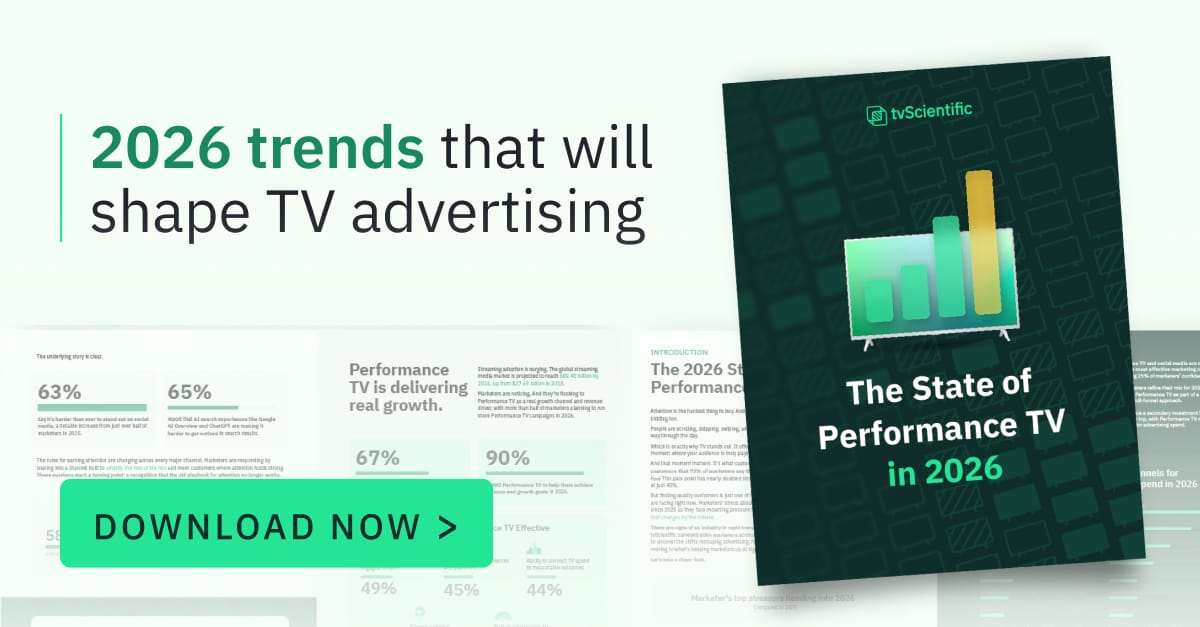
Attention is the hardest thing to buy. And everyone else is bidding too.
When people are scrolling, skipping, swiping, and split-screening their way through the day, finding uninterrupted moments where your audience is truly paying attention is the priority.
That’s where Performance TV stands out.
Check out the data from 600+ marketers on the most effective channels to capture audience attention in 2026.
That's all for now!
We'll catch you in the next one.
Cheers,
The AI Horizons Team
P.S. If you missed our last issue, no worries, you can check out all previous issues here!
P.P.S We value your thoughts, feedback, and questions - feel free to respond directly to this email!
... and if you enjoyed this email and would like to support our work and help us keep bringing you cutting-edge AI insights, you can donate here. Every bit makes a difference—thank you for your support!
What did you think about today's email? |