- AI Horizons
- Posts
- OpenAI’s Daybreak Brings Frontier AI to Cyber Defense
OpenAI’s Daybreak Brings Frontier AI to Cyber Defense
PLUS: ChatGPT Gets a Finance Layer, xAI Launches Grok Build, and AI Labs Race for Creative Data
In partnership with

Welcome back to AI Horizons, your weekly guide to the latest in AI and tech for builders, leaders, and curious minds everywhere. Here’s what’s on deck:
OpenAI Daybreak
ChatGPT for Finance
Grok Build
Claude Code Dashboard
OpenAI Apple Tensions
Creative AI Data
FEATURED INSIGHT💡
OpenAI Daybreak: Frontier AI Moves Deeper Into Cyber Defense

OpenAI introduced Daybreak, its vision for using frontier AI to help cyber defenders find, understand, and fix security risks earlier in the software development process. The idea is to move security closer to where software is built, so teams can catch vulnerabilities, validate patches, and make code more resilient before problems reach production.
Daybreak combines OpenAI’s models, Codex as an agentic coding harness, and security partners to support workflows like secure code review, threat modeling, patch validation, dependency risk analysis, detection, and remediation guidance. OpenAI is also introducing different access levels, including Trusted Access for Cyber and GPT-5.5-Cyber, designed for verified defensive work in authorized environments.
Why it matters: AI is starting to look less like a security assistant and more like an active defensive layer inside the software lifecycle. For engineering and security teams, that could mean shorter vulnerability backlogs, safer patching at scale, and more audit-ready evidence for remediation.
We hired one colleague for every department.

Last Tuesday, marketing asked Viktor to write the weekly campaign recap, pull performance from Google Ads and Meta, and format it as a PDF for the exec team. Done in four minutes.
That same afternoon, engineering asked Viktor to review three open pull requests on GitHub, cross-reference with the Linear sprint board, and flag anything blocking the release. Posted to private channel before standup.
At 9pm, ops asked Viktor to draft a vendor contract summary from three Notion docs and send it to the team. It was in #ops by morning.
None of them knew the others were using it.
Same colleague. Three departments. That's what changes when your AI coworker lives in Slack, where your whole company already works. It's not a tool one person logs into. It's a teammate everyone messages.
5,700+ teams. SOC 2 certified. Your data never trains models.
"Viktor is now an integral team member, and after weeks of use we still feel we haven't uncovered the full potential." - Patrick O'Doherty, Director, Yarra Web
ON THE HORIZON 🌅
ChatGPT Is Starting to Look Like a Personal Finance Layer

OpenAI is previewing a new personal finance experience in ChatGPT for Pro users in the U.S., letting people securely connect financial accounts, see where their money is going, and ask questions based on the data they choose to connect. It is also positioning ChatGPT Business as a workspace for finance teams to analyze statements, KPIs, budgets, forecasts, expenses, cash flow trends, and internal documents.
The use cases are practical: consolidating revenue and expense files into profit-and-loss statements, running variance analysis, identifying duplicate payments or unexpected vendor activity, drafting executive summaries, and turning messy internal files into leadership-ready answers. OpenAI also emphasizes privacy and security, including no training on business data by default, SSO, multi-factor authentication, dedicated workspaces, and centralized user management.
Why it matters: ChatGPT is moving closer to the systems where business decisions actually happen. If finance teams can safely connect internal data, automate routine analysis, and generate explainable reports, AI starts to become less of a writing tool and more of an operations layer.
LATEST IMPORTANT NEWS 📰
Clawdmeter Turns Claude Code Usage Into a Tiny Desktop Dashboard
A new open-source project called Clawdmeter gives Claude Code power users a small hardware dashboard for tracking token usage and utilization. Built by software developer Hermann Haraldsson, the device pairs with a laptop over Bluetooth, shows pixel-art Clawd animations, and displays session and weekly Claude usage data. It is playful, but it also captures a real developer trend: AI coding tools are becoming part of daily engineering culture, and people are starting to treat token usage almost like a productivity metric.
OpenAI Is Reportedly Considering Legal Action Against Apple
OpenAI is reportedly exploring legal action against Apple over a ChatGPT integration that did not generate the subscriber growth or platform visibility the company expected. The partnership originally brought ChatGPT into Apple operating systems through Siri and Visual Intelligence, but OpenAI is reportedly frustrated that the integration is hard to find and underperforming commercially. The story is also a reminder that even the biggest AI companies still depend on distribution, and Apple continues to control one of the most valuable consumer platforms in the world.
Wirestock Raises $23M to Supply Creative Data to AI Labs
Wirestock, once focused on helping photographers sell work through stock platforms, has raised $23 million after pivoting into multimodal data supply for AI labs. The company now works with artists and designers to provide datasets across images, video, design assets, gaming, and 3D content. The funding points to a bigger trend: as model makers look for better training data, creative marketplaces are becoming strategic suppliers, especially for image and video generation.
Attio - the AI CRM for modern businesses.
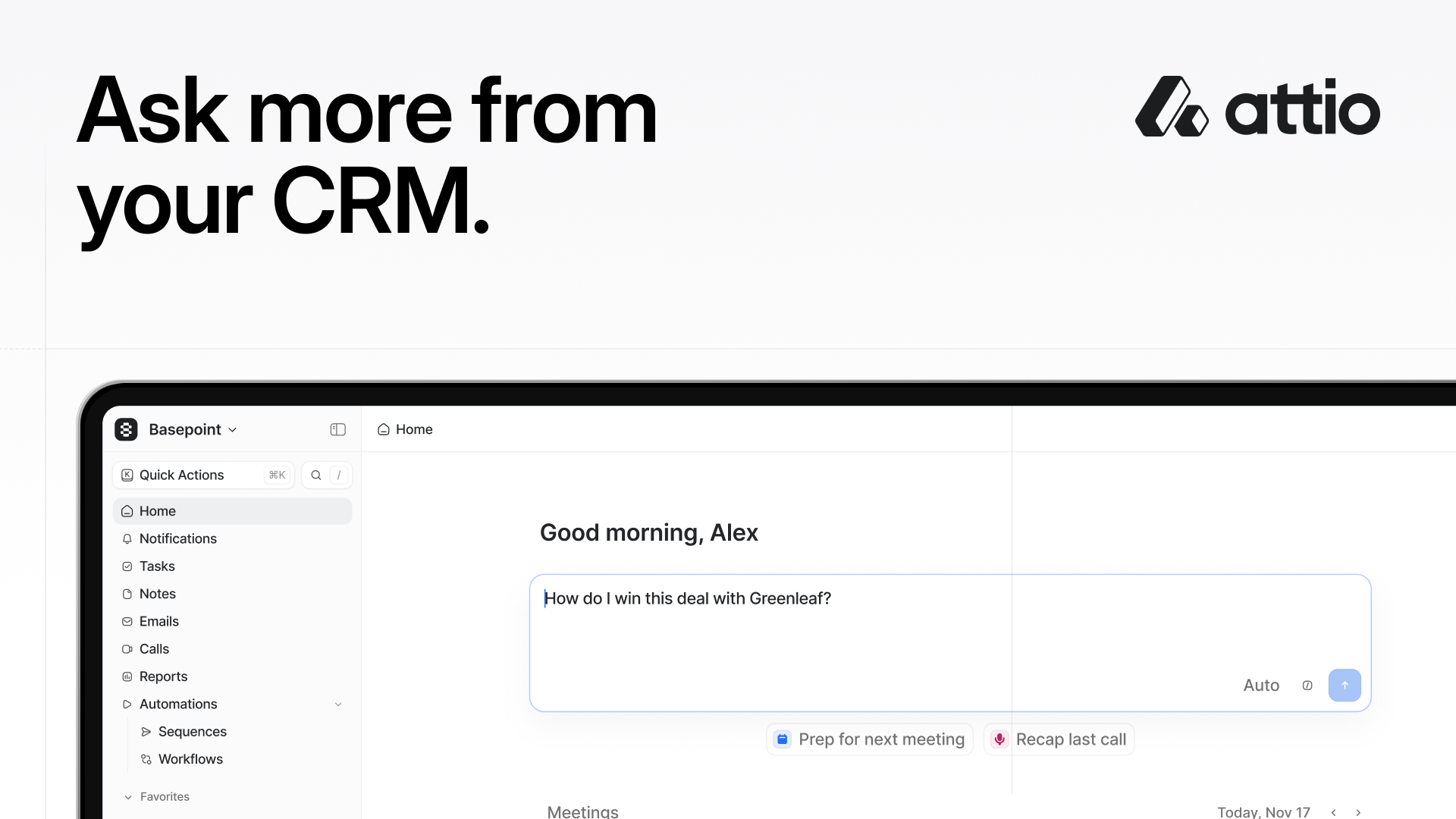
Attio is the AI CRM that keeps you ten steps ahead.
Ask Attio anything. Where should I focus? What deals are at risk? Search, update, and create across your customer data.
Ask more from CRM. Ask Attio.
FOR THE TECHNICALLY INCLINED 🛠️
xAI Drops Grok Build, an Agentic Coding CLI
xAI introduced Grok Build, an early beta coding agent that runs in the terminal and can read your repo, propose a plan, edit files, execute shell commands, and check its own work. It includes parallel subagents for splitting up larger tasks, Plan Mode so developers can approve the approach before execution, headless mode for scripts and automations, and a 2 million token context window for working across large codebases.
The setup is intentionally lightweight: install with a single curl command, sign in, and start using it without API key setup or config files. The bigger takeaway is that the coding agent race is moving deeper into the developer workflow. The terminal is becoming a command center for AI agents that can reason, act, test, and iterate inside real projects.
AI TOOL OF THE DAY 🚀
APImage helps ecommerce brands, enterprise teams, and creatives generate consistent characters, backgrounds, and objects on demand.
Are you tracking agent views on your docs?

AI agents already outnumber human visitors to your docs — now you can track them.
That's all for now!
We'll catch you in the next one.
Cheers,
The AI Horizons Team
P.S. If you missed our last issue, no worries, you can check out all previous issues here!
P.P.S We value your thoughts, feedback, and questions - feel free to respond directly to this email!
... and if you enjoyed this email and would like to support our work and help us keep bringing you cutting-edge AI insights, you can donate here. Every bit makes a difference—thank you for your support!
What did you think about today's email? |